

As a Shopify Partner, Supadu builds fully integrated Shopify and Shopify Plus websites for publishers. Our scalable eCommerce solutions combine metadata-driven product pages, advanced search, accessibility, seamless integrations and conversion-focused checkout to increase discoverability, grow direct-to-consumer sales and strengthen reader relationships.


Built for easy book eCommerce
Supadu enhances Shopify to support the complexities of book selling.
Multiple formats (paperback, hardback, ebook), contributor data, series information, and rich descriptions are handled seamlessly. Instead of forcing books into standard product templates, the platform adapts to how publishing actually works.
This ensures a smoother user experience and a more accurate representation of your catalogue.
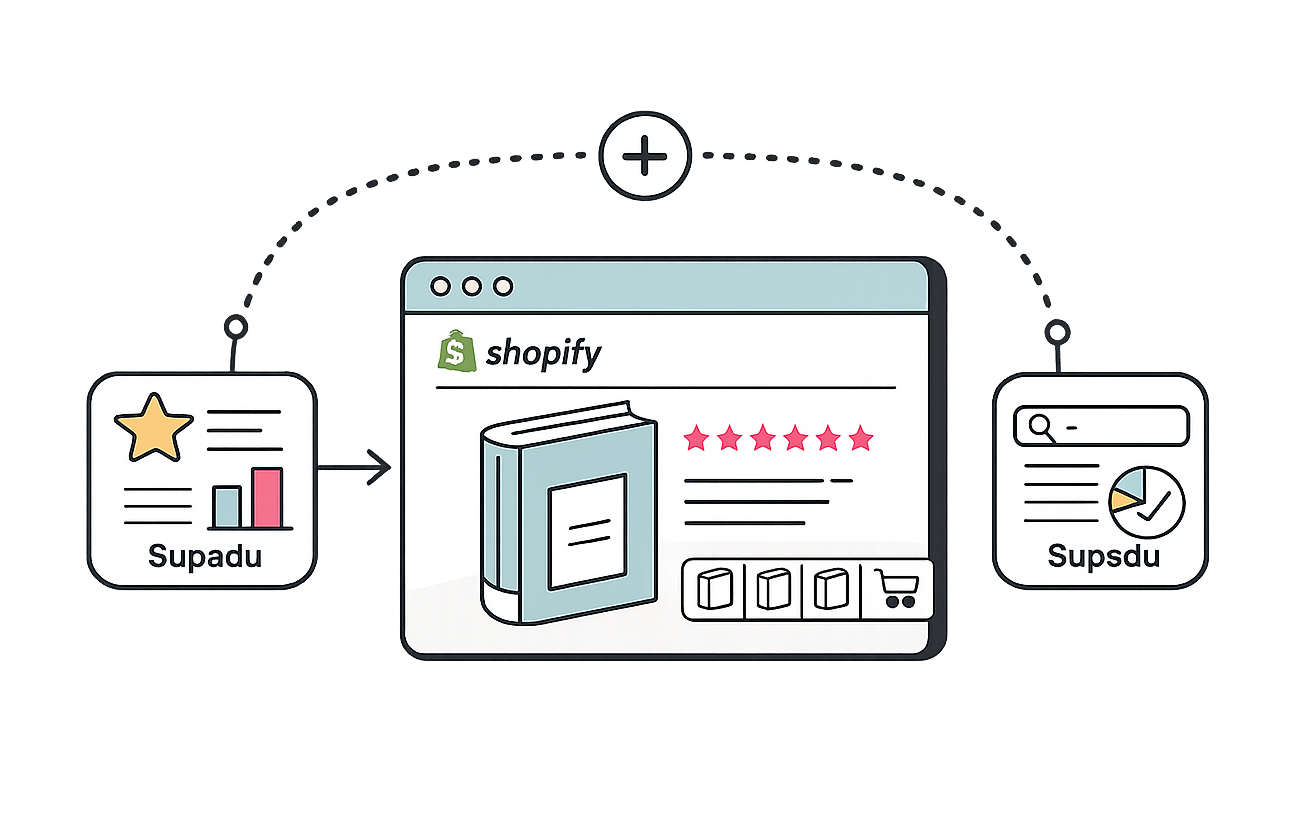
Supadu App Blocks
Shopify is a powerful eCommerce platform, but it wasn't necessarily designed for book publishers – that's why we developed our own Supadu App Blocks, which better supports complex publishing and catalog workflows.
These act as a publishing layer, connecting ONIX metadata, inventory, fulfilment and multiple publishing systems into one seamless solution.
More than an API or connector, it extends Shopify with publishing-specific functionality, remains theme agnostic and evolves alongside the platform.
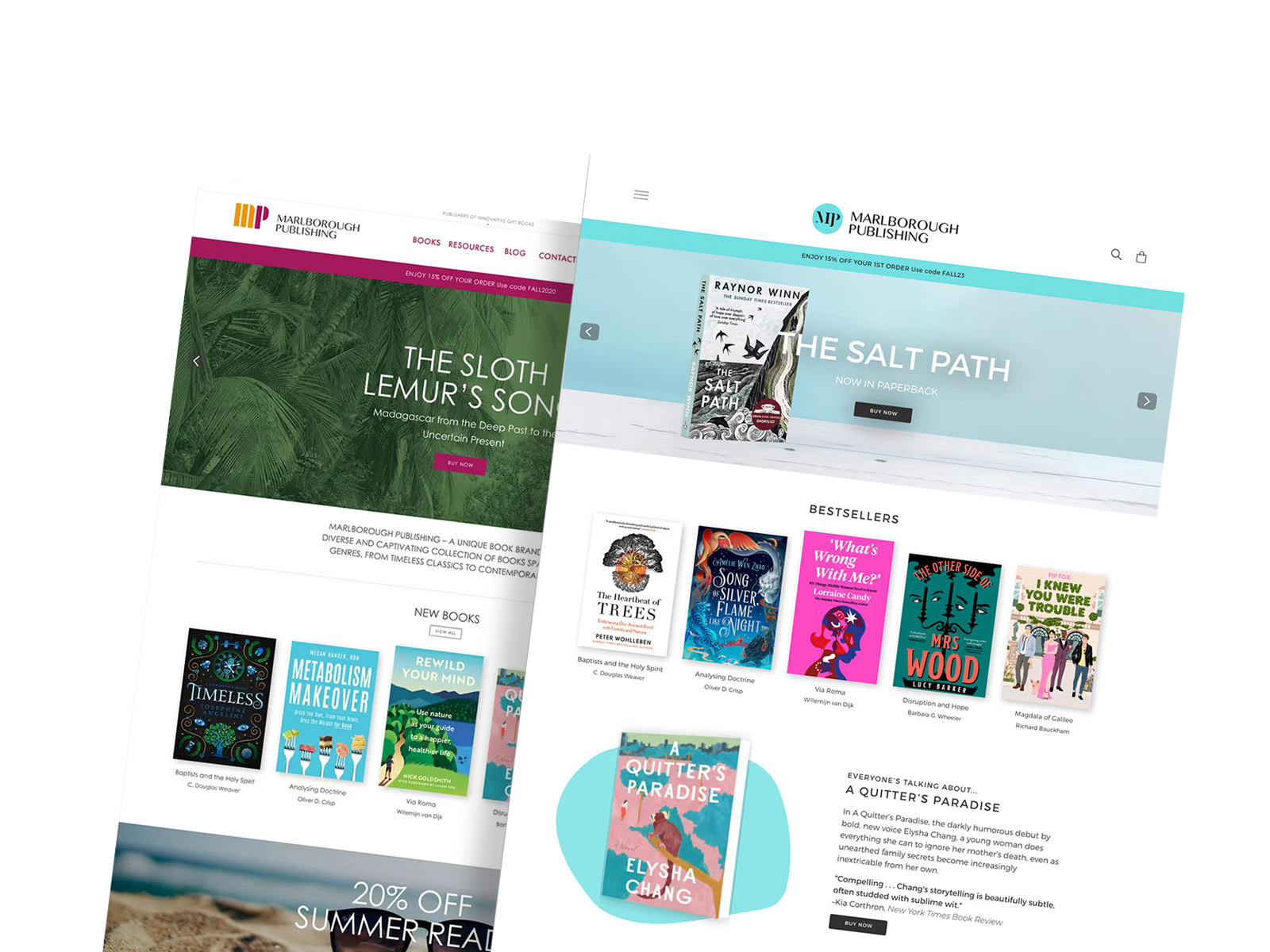
Publishing-focused themes, ready to scale
Supadu uses Shopify themes that are suitable for publishers.
They combine clean, modern design with structured layouts that prioritise discoverability—featured titles, categories, series, and recommendations are all built in. Fully responsive and scalable, these themes work whether you have 100 titles or 100,000.
The result is a site that looks right, performs well, and grows with your catalogue.


Your Shopify Plus partner for book ecommerce
Shopify Plus powers ecommerce for some of the world's most successful and fastest-growing brands.
As a Shopify Plus Partner, Supadu combines deep Shopify expertise with decades of publishing experience. We help publishers get the most from the platform with solutions designed specifically for book ecommerce, backed by ongoing development, support and a team that evolves alongside Shopify.


SHOPIFY WEBSITE EXAMPLES
Arcadia Publishing's Shopify Plus website makes discovering more than 20,000 local and regional history titles simple through advanced publishing metadata, powerful search, faceted navigation, and browsing by location, historical series, publisher imprint, and themed collections.
Built specifically for publishers, the scalable platform also supports wholesale services, content management, and author resources, creating an enterprise ecommerce experience that improves title discoverability and drives online sales.
SHOPIFY WEBSITE EXAMPLES
The Mills & Boon Australia website delivers a seamless ecommerce experience for physical and digital books, with subscription functionality, customer accounts, and flexible promotions.
Integrated with VitalSource for secure ebook fulfilment, the platform provides automated digital delivery, DRM protection, and instant access to purchased ebooks, creating a scalable publishing solution that supports both physical and digital sales.
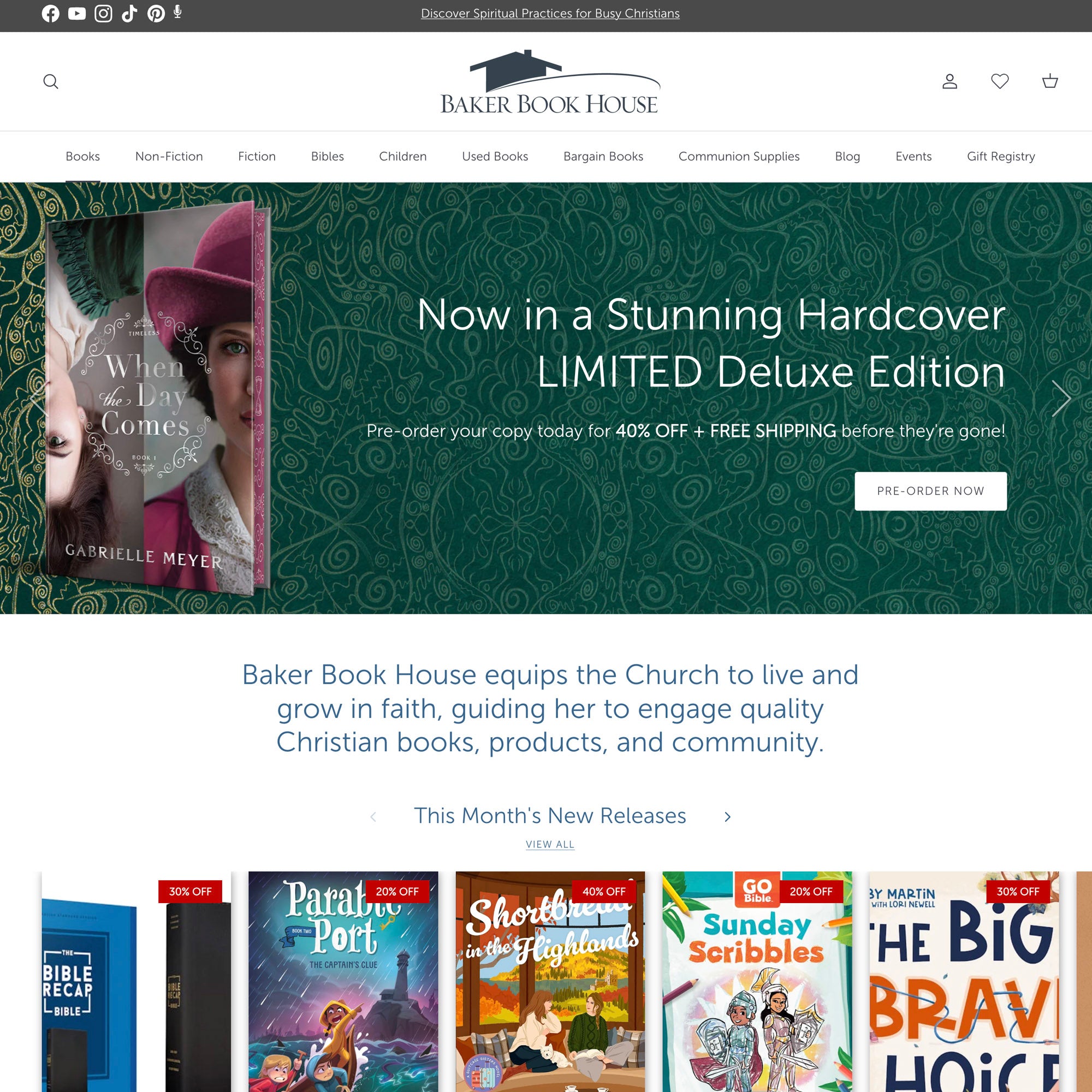
SHOPIFY WEBSITE EXAMPLES
The Baker Book House website is built on Shopify Plus, making it easy to discover more than 120,000 books, Bibles, gifts, and resources through powerful search, curated collections, promotions, and intuitive product discovery.
Integrated with inventory from Baker Book House's physical store, the platform enables customers to shop new, used, and bargain books online from a single catalogue, delivering a seamless omnichannel experience that connects in-store inventory with online sales.
Advantages of a Shopify website

Metadata-driven product pages
Automatically enriched book pages powered by ONIX data—titles, contributors, subjects, formats, and descriptions all structured and scalable.

Multi-format product handling
Seamlessly manage paperback, hardback, ebook, and audiobook formats within a single product experience.

Shopify app blocks
Drag-and-drop blocks for related titles, series, author info, and more—dynamic content that updates automatically via metadata.

Seamless eCommerce integration
Full use of Shopify’s checkout, payments, and global commerce tools, enhanced for book-specific workflows.

Scalable catalogue management
Built to handle growing lists—from small presses to large publishers—without manual page creation or maintenance.

Direct-to-consumer capability
Sell directly to your readers through your own Shopify site—own the customer relationship, capture first-party data, and control pricing, bundles, and promotions without relying on third-party retailers.


Shopify Platform FAQs
Have questions about Shopify? These FAQs cover the most common topics, including how Supadu integrates with Shopify, metadata management, and platform capabilities.
Supadu configures Shopify for publishers by combining Shopify’s ecommerce platform with Supadu’s metadata automation, publishing-focused setup, and optional enhanced search and discovery tools.
The Supadu App Block is a Shopify integration that displays metadata from Supafolio on Shopify product pages. This can include title, contributor, ISBN, categories, and other ONIX-driven metadata fields.
It helps ensure product pages stay aligned with your metadata source, reduces manual updates, and allows richer publishing-specific information to appear in Shopify than would usually be practical to manage product by product.
The App Block pulls metadata from your Supafolio catalogue, which is populated from your feeds and related assets.
Yes. The metadata display is designed to align with your chosen Shopify theme styles so the product page feels visually consistent.
Yes. Because metadata is feed-driven, title changes can be reflected through the catalogue workflow rather than manually updating each Shopify product page.
You can manage many standard Shopify areas directly, but feed-driven product data may overwrite manual changes depending on the field and setup. Supadu will advise which areas are safe to manage directly.
Yes. Shopify has platform constraints, so some advanced behaviours may require additional custom development or may be better suited to WordPress depending on your requirements.
They can be considered, but app requests should be reviewed first. Because publisher stores often include feed-driven data and fulfilment integrations, unreviewed apps can create conflicts or maintenance issues.